KNEE BRACE
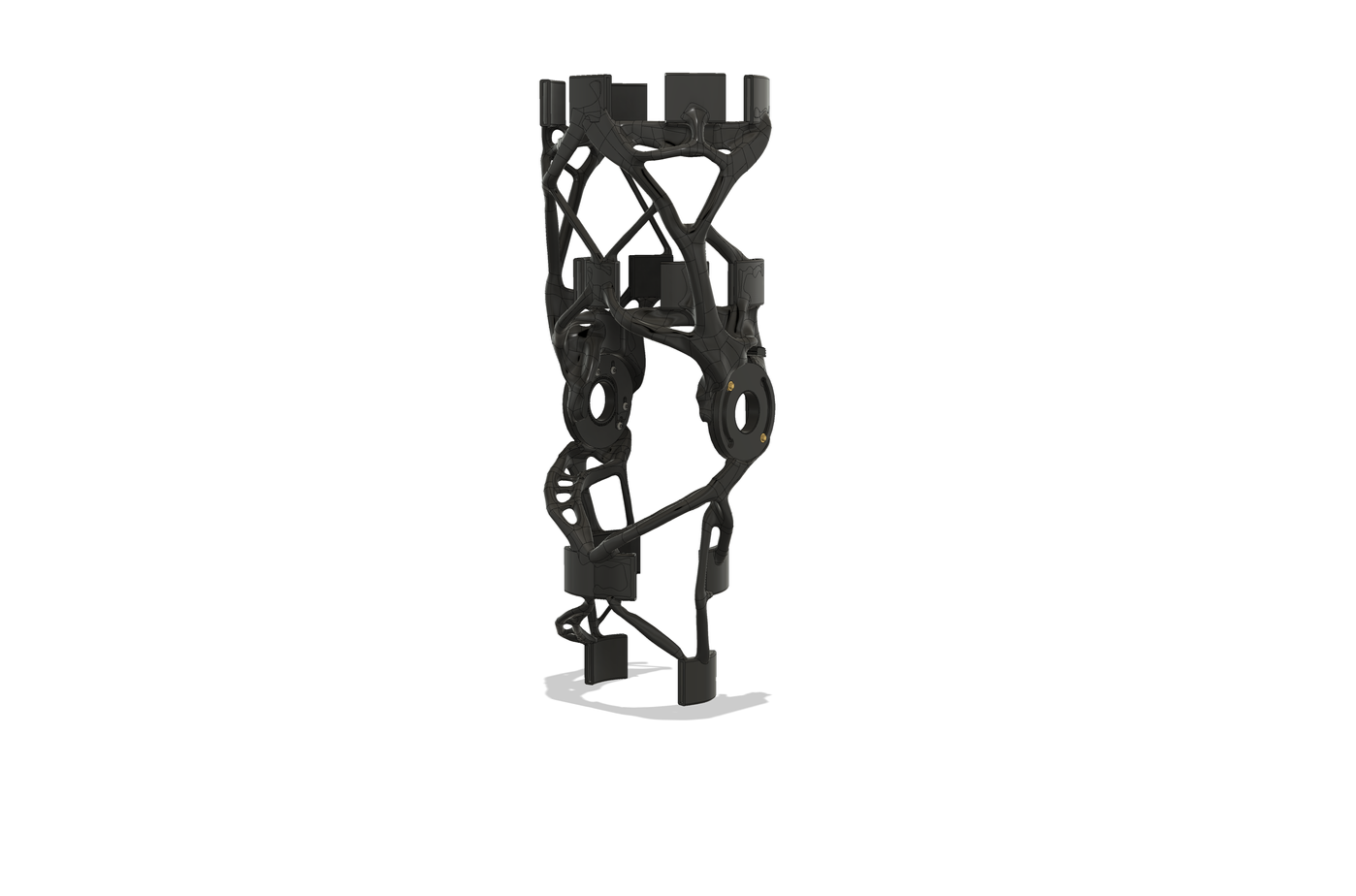
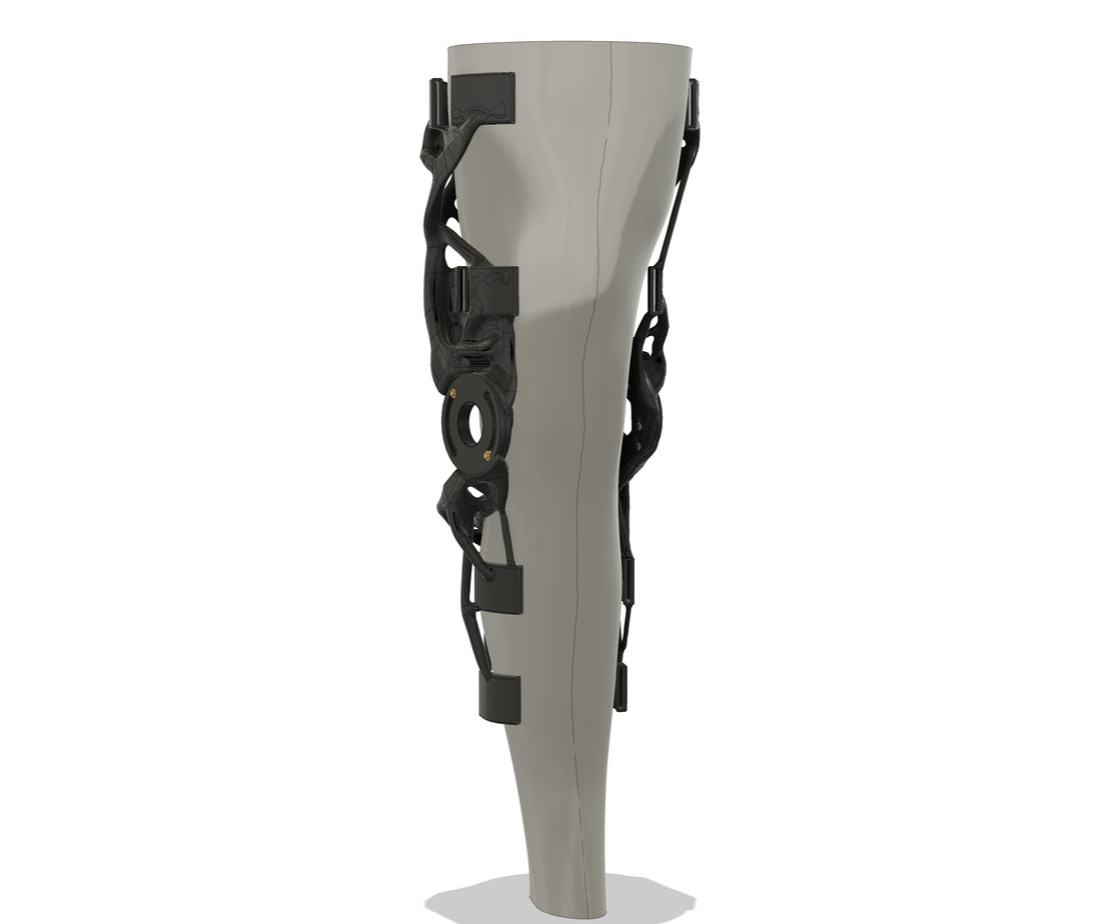
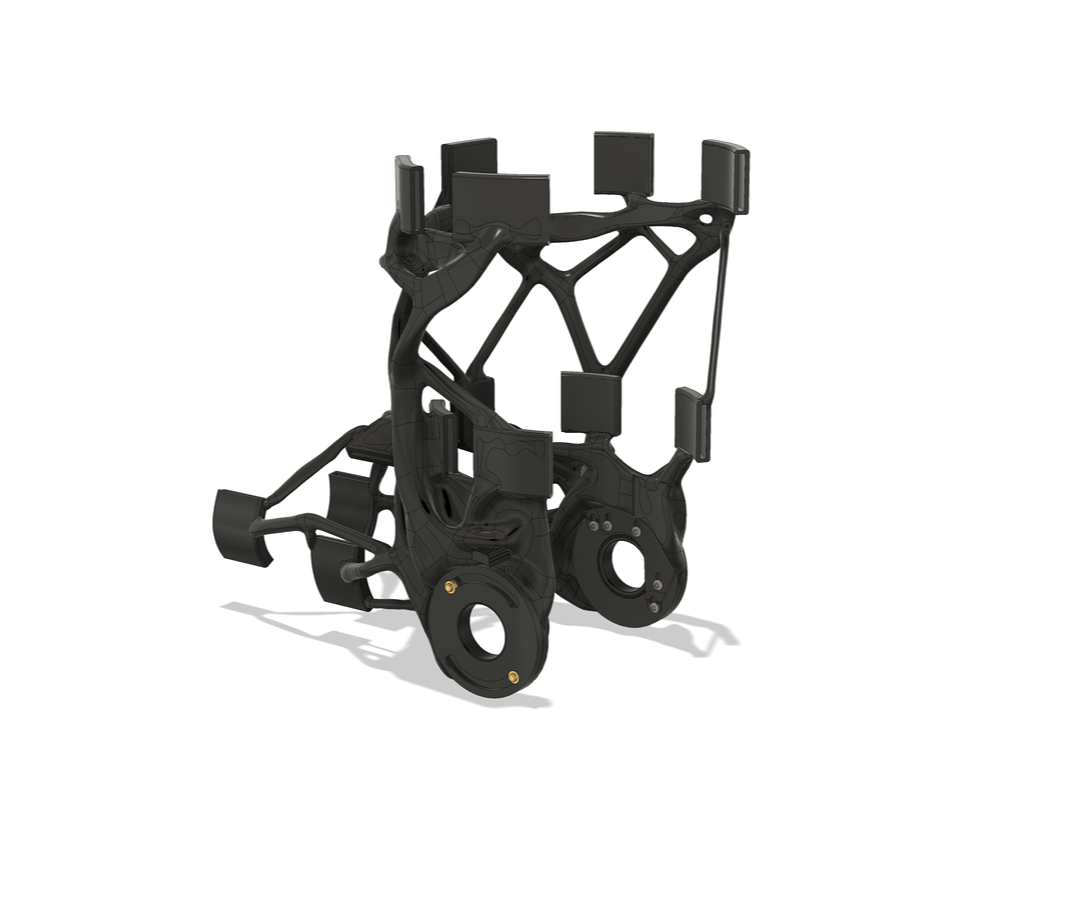
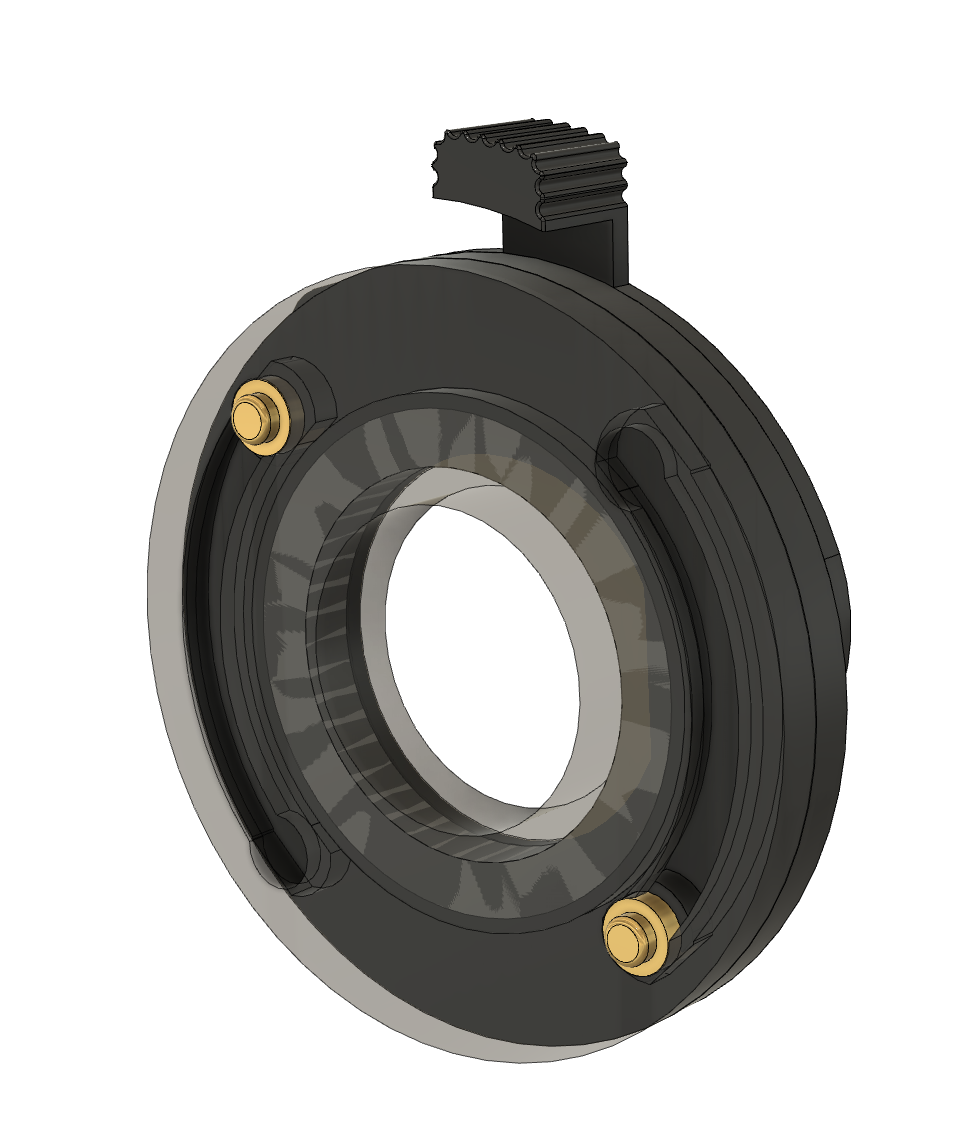
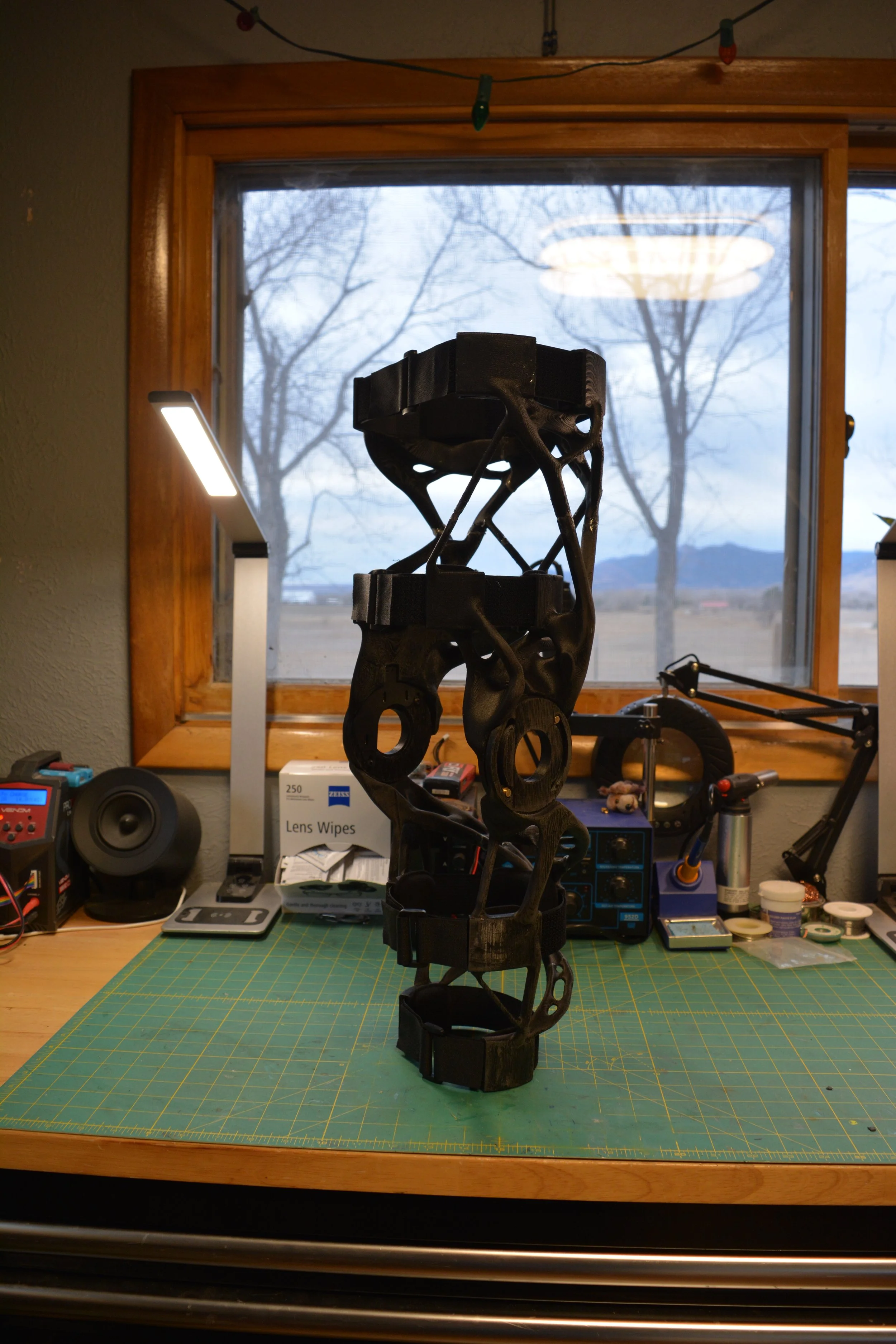
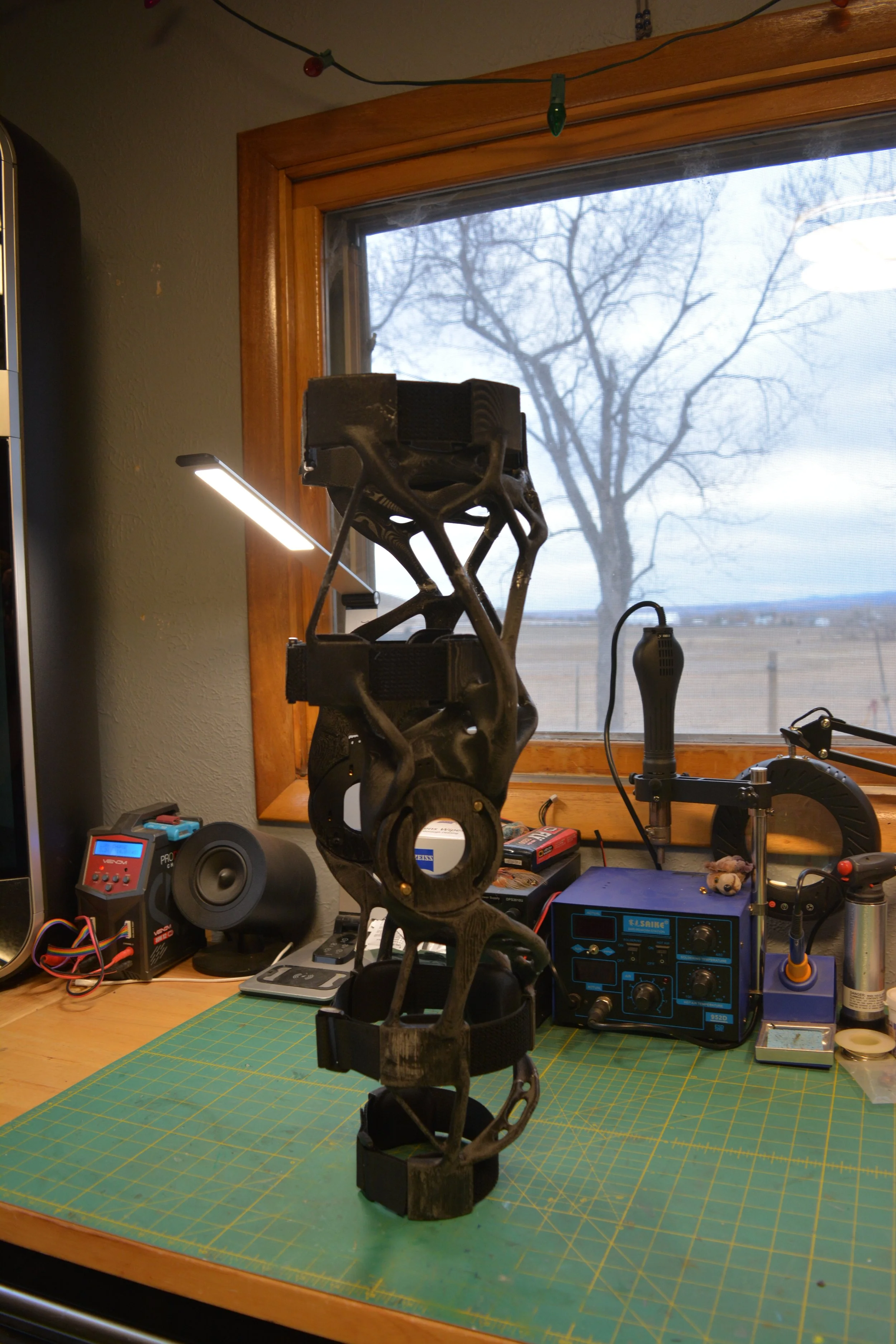
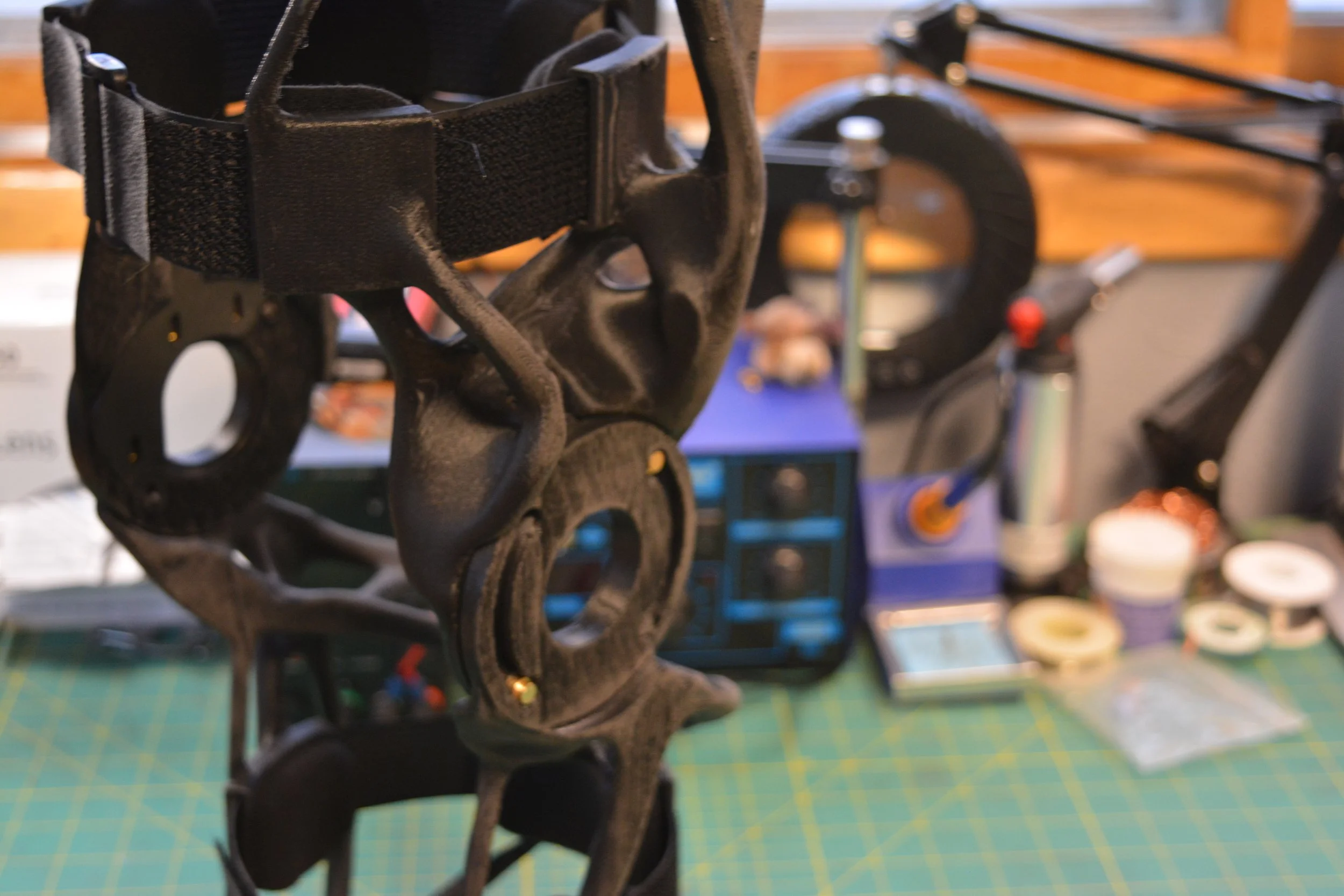
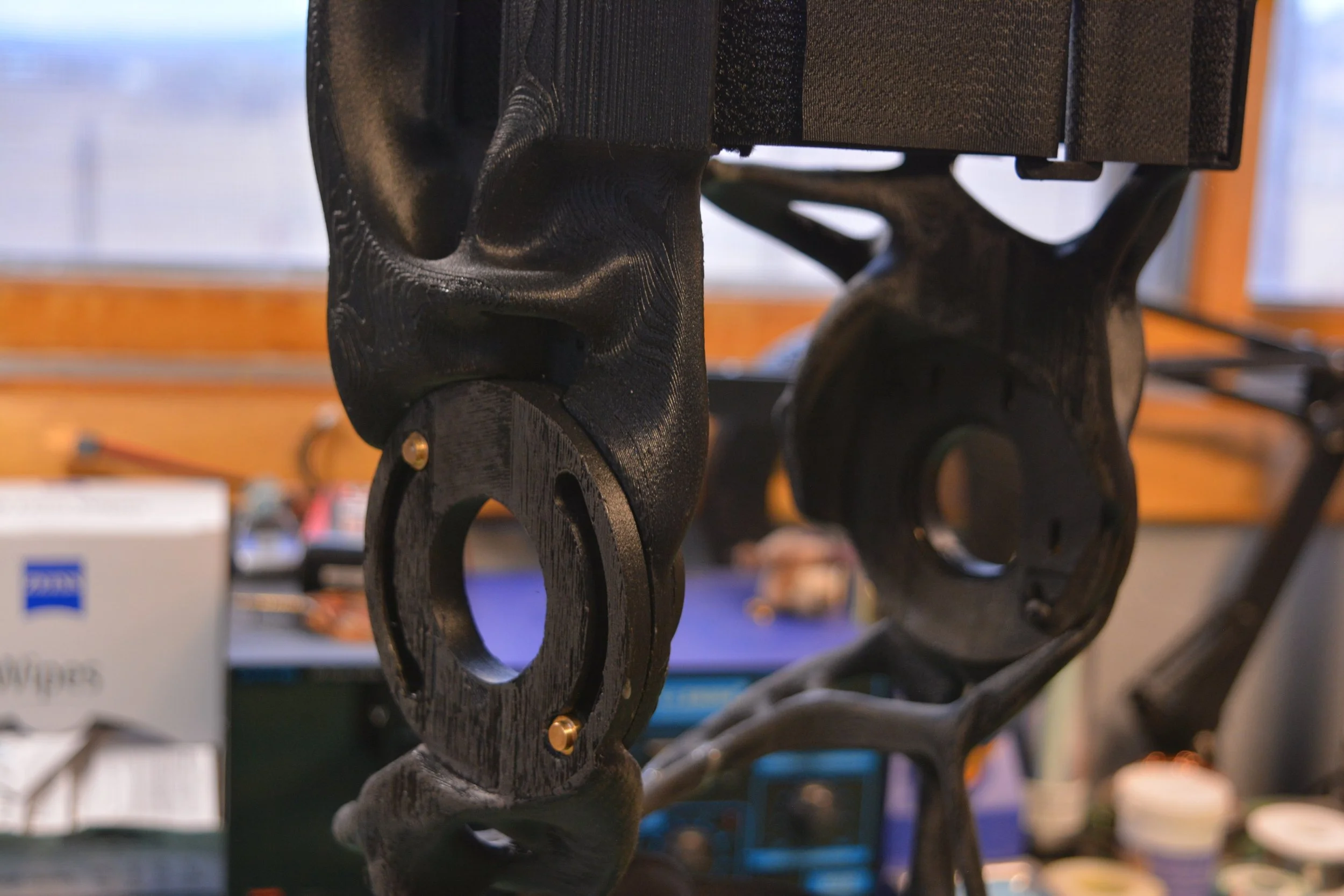
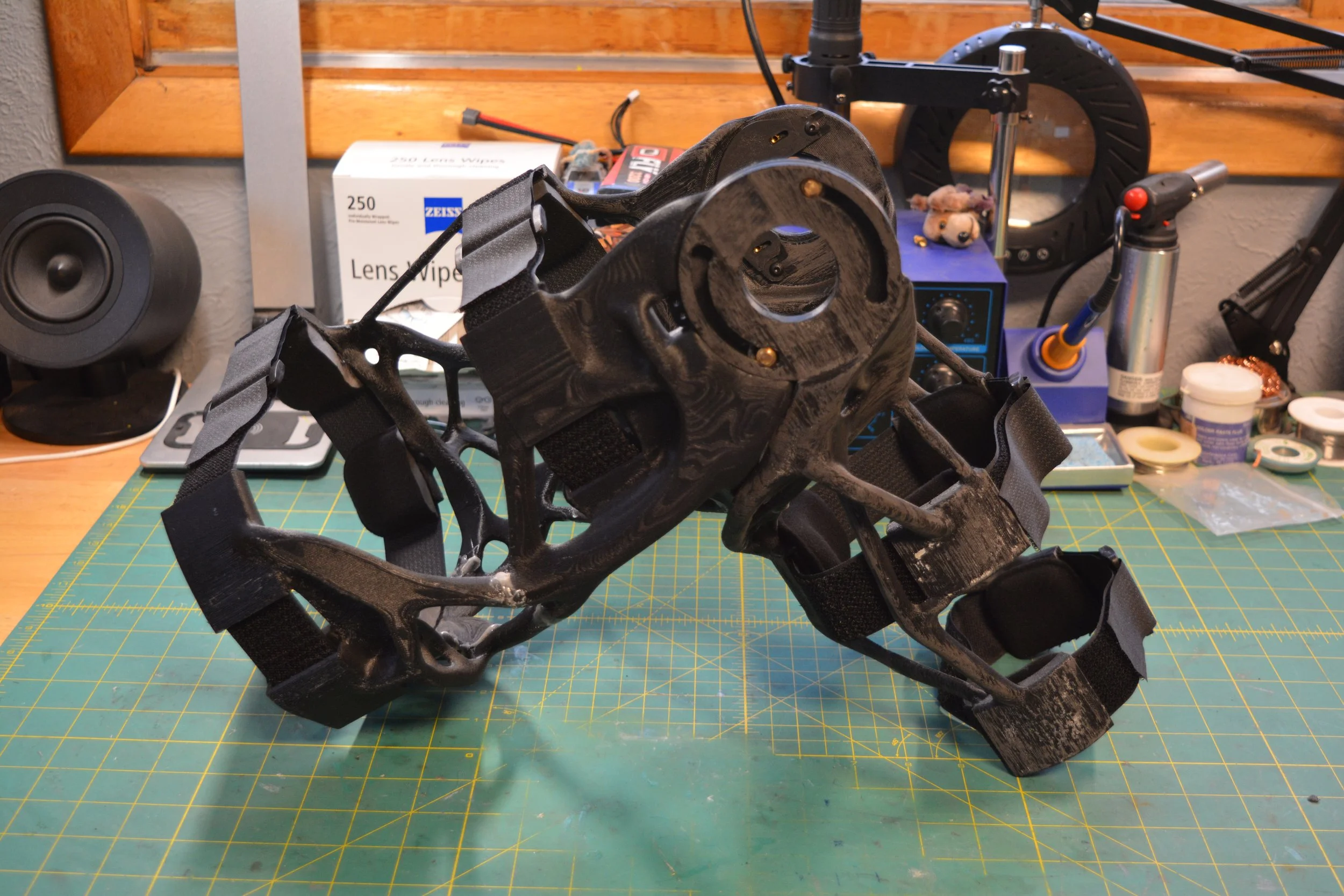
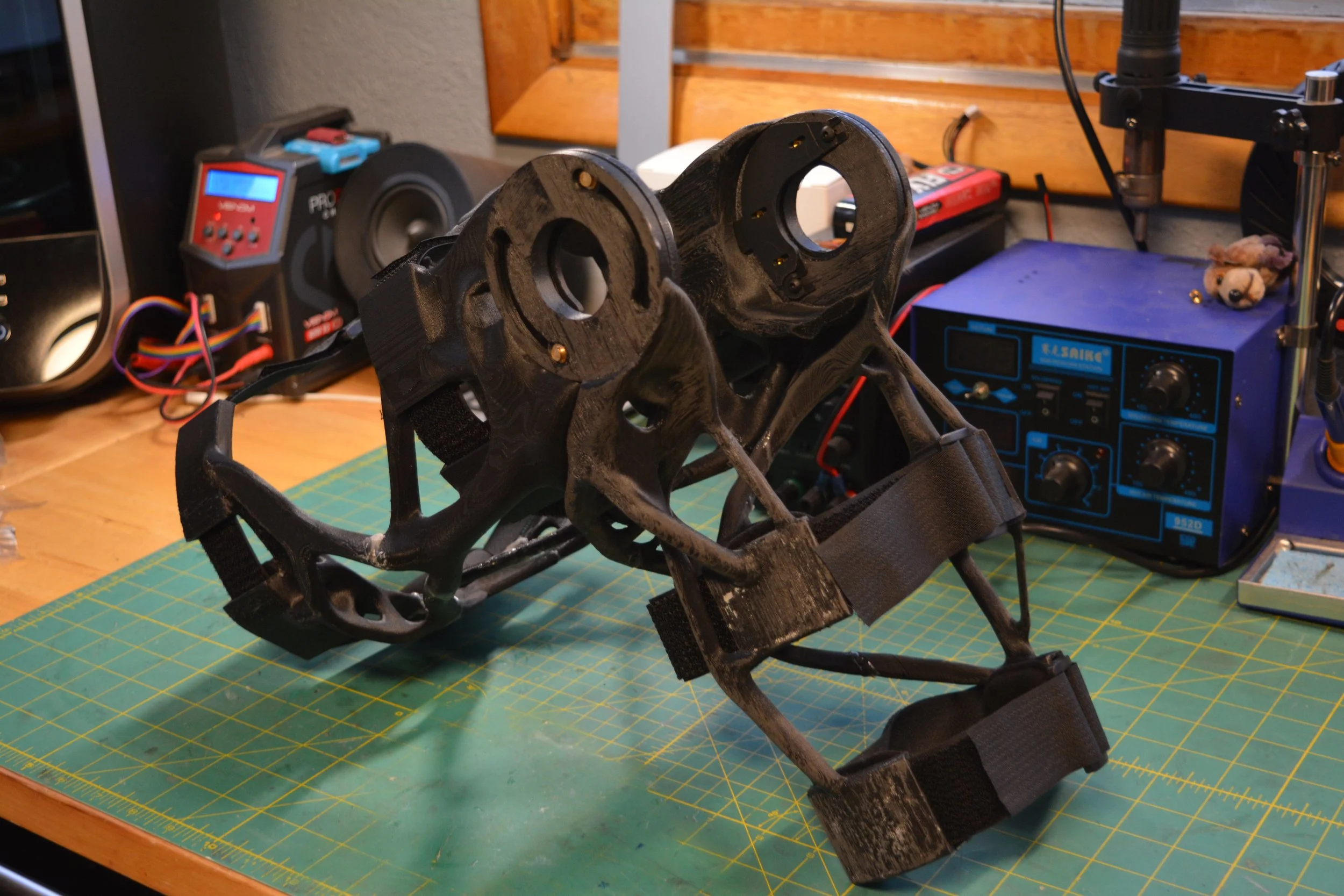
Late 2025, I learned I was missing 1.5 cm of cartilage on my knee joint, causing my knee to stick and me to hit the bone in some movements, so naturally I needed surgery to remedy this issue. In preparation for this surgery and right after, I had plenty of downtime on my hands, and I used it to make a custom knee brace from a 3D scan of my own knee. Naturally, I went to Fusion 360, as they have a very intuitive and strong generative design workflow. After I designed a custom joint that I could lock out and also restrict movement to 90 degrees with a simple dimple retention system, I moved on to the overall structure of the part. For this, I started by 3D scanning my leg so I had an accurate model to create my design around. Once I converted it to a solid body from a mesh, I was ready to start entering my load requirements and have the software model this part. I entered many different materials from the Fusion library so I had flexibility in the outcomes I could choose from. Once I received the outcomes that were in line with my overall design idea, I could start preparing them for FDM manufacturing. This was a difficult task, as the parts were very complex in nature, as they take an organic resemblance for a strong and light shape. Once orienting and slicing the parts, I made 1/8 in holes into the joints so I could join them with carbon fiber rods for added rigidity and alignment when gluing. The choice of material was difficult as well. I needed something rigid enough that it would keep my leg straight but also something that was relatively cost effective, as it's a large piece. I like the mechanical properties of fiber reinforced filaments, so I started looking at carbon fiber nylon or carbon fiber polyphenylene sulfide, but neither were very cost effective for such a large piece. I landed on PETG-GF. It's a rigid composite from the fiberglass but has some flexibility from the PETG, and it's a plastic that I can use a solvent based glue on for an extremely strong bond. Once all the parts were printed, the locking pins lathed, and the bearings installed, I was onto gluing with the solvent based glue and the 1/8 in carbon fiber rods. It created an extremely strong bond, making for a very rigid and durable part. As with anything, when it was first made there were some revisions. In the end, it was a fully functional immobilizer to aid in my healing.